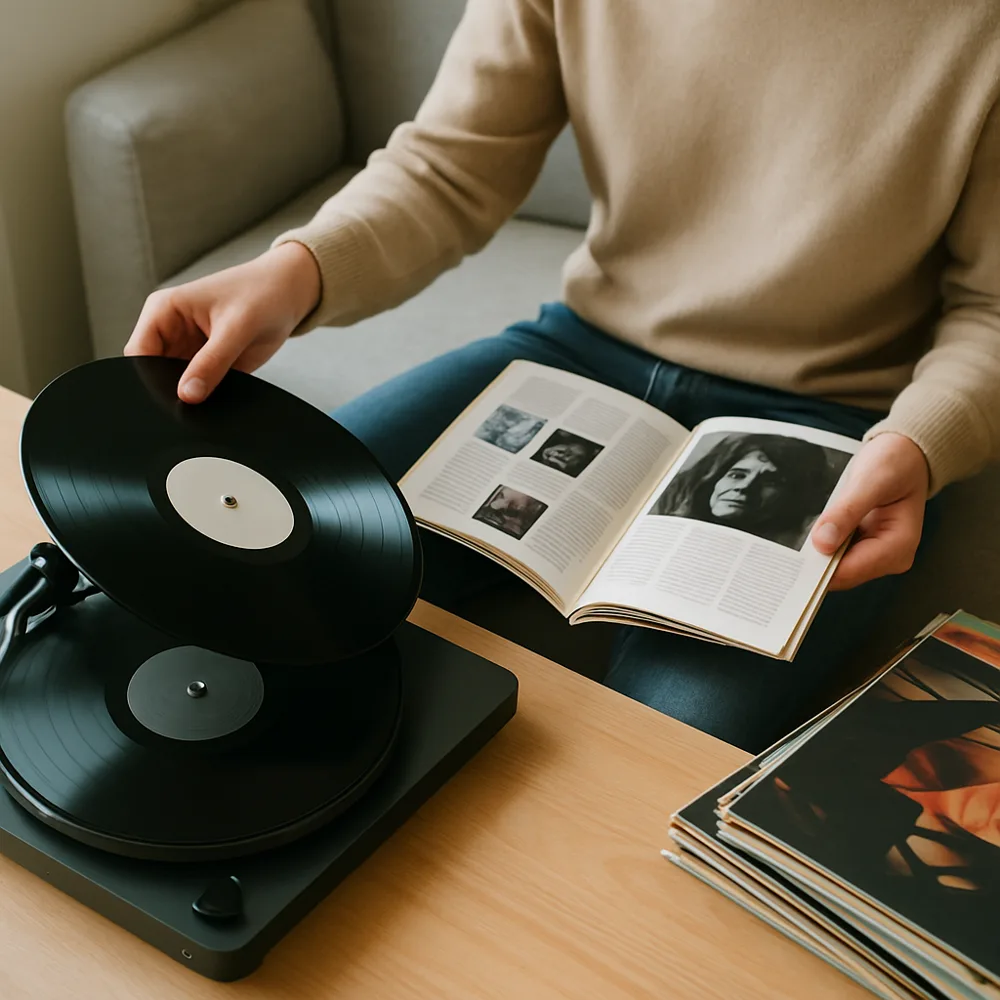
Soul is a broad musical tradition rather than one fixed sound. Its records draw on gospel, rhythm and blues, pop, jazz, and other influences, with artists shaping those ingredients in distinctive ways. Some performances lean on a tight rhythm section and a direct vocal delivery; others use lush strings, layered harmonies, or a rougher edge. Follow what catches your attention instead of trying to find a single definition that covers every record.
For a first listen, focus on the relationship between voice and rhythm. Notice how a singer stretches a phrase, answers a backing vocal, or pushes against the beat. Then listen again to the arrangement beneath them: the bass line, handclaps, horns, organ, or drum pattern may be carrying as much character as the melody. A record can sound joyful and still contain tension, or feel understated while building toward an expressive peak.
Explore by artist, label, producer, region, or era, but let those categories guide rather than limit you. Compilation albums can provide an accessible overview, while full albums show how performers develop a larger mood across multiple tracks. When buying used copies, assess the condition of the actual disc and sleeve rather than relying on reputation. Soul has room for polished pop craft, raw performances, and everything between. The best entry point is the record that makes you want to hear another.
Also on this site: All coverage